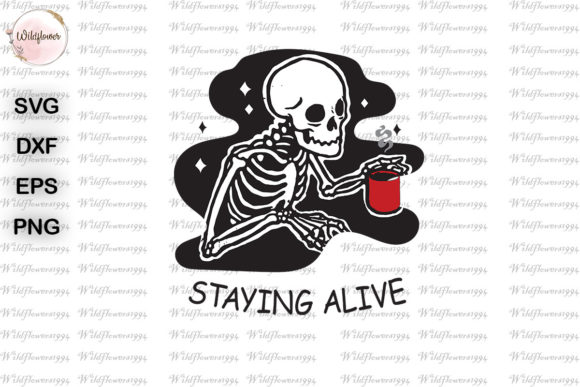
Staying Alive: A Designer's Review for Real Embroidery Projects
As someone who has spent years navigating the intersection of digital graphics and physical stitching, I approach every new machine embroidery design with a critical eye. The market is flooded with files that look stunning on a screen but fall apart when converted to thread. When I first opened the Staying Alive file, my immediate thought was about its potential as a seasonal staple rather than just a fleeting trend. This design features a skeleton enjoying coffee, a motif that perfectly captures the "Spooky Mom" aesthetic while remaining versatile enough for broader audiences. It sits comfortably in the Crafts category, but its true value lies in how it translates from a digital asset into a tangible, high-quality finished product.
The Visual Impact and Mood of Staying Alive
The first impression of Staying Alive is one of playful morbidity mixed with cozy comfort. The skeleton holding a steaming cup creates an immediate emotional connection for anyone who relies on caffeine to survive their day, especially during the darker months of Halloween. Visually, the layout is balanced. The skeleton figure is not overly cluttered, which is a common pitfall in many digital embroidery files. The lines are clean, suggesting that the conversion to stitch data should be straightforward without excessive underlay requirements. For an Etsy seller or boutique owner, this kind of clarity is essential. Customers browsing your shop want to see a crisp image, not a muddy mess of thread.
In terms of visual personality, this design screams "funny Halloween shirt design" but also works beautifully as a subtle accent on home goods. The contrast between the stark white bones and the warm tones of the coffee creates a natural focal point. However, as a professional, I always ask myself: does this hold up when scaled? The answer appears to be yes, provided you respect the minimum size limits inherent to any intricate graphic. The shape of the skull and the handle of the mug are distinct enough to maintain recognition even when reduced slightly, though I would advise against going too small.
Real-World Application: From Screen to Stitch
Let’s talk about a real scenario. Imagine you are preparing a batch of custom apparel for a local craft fair. You have a stack of heavyweight cotton sweatshirts in charcoal gray. You decide to use Staying Alive as the centerpiece for a limited edition run. Because the design includes both solid areas (the coffee) and line work (the skeleton), it offers a great opportunity to mix fill stitch and satin stitch. The fill stitch can give volume to the coffee cup, making it look inviting, while the satin stitch can define the edges of the ribs and skull, adding a professional sheen.
This particular design shines on custom apparel like tote bags and aprons. Picture a canvas tote bag for a "Coffee Shop" themed giveaway at a spooky event. The durability of the design ensures that even after multiple washes, the stitch density holds firm. If you were to apply this to a baby item, such as a onesie for a toddler whose parents love Halloween, you would need to be cautious with the placement. While the theme is cute, ensure the fabric texture isn't too loose, or the fine details of the skeleton might get lost in the weave.
For those running a craft business, this design is a strong contender for holiday merchandise. It fits the holiday embroidery niche perfectly without being overly specific to one brand. It allows for personalization; you could add a name below the skeleton or change the text on the coffee cup using a matching font. This flexibility increases the perceived value of the handmade product, allowing you to charge a premium for a truly unique item.
Navigating Challenges: Where Caution is Needed
Despite its strengths, Staying Alive requires careful handling in certain situations. If you are working with small hoop sizes, you may find that the intricate details of the skeleton's fingers or the steam rising from the cup become difficult to execute cleanly. In these cases, simplifying the design or increasing the overall scale is necessary to avoid thread breaks and puckering.
Fabric choice is another critical factor. On textured fabrics like corduroy or heavy denim, the fine lines of the skeleton might not stand out as clearly. You will likely need a heavier stabilizer to prevent the fabric from shifting during the embroidery process. Similarly, if you are embroidering on stretchy fabric or dark materials, the thread colors must be chosen with precision. A light-colored thread on a black background needs high coverage to look opaque, whereas on a light background, you might need fewer layers. Always test the design on scrap fabric first to check the thread color contrast and ensure the final result matches your vision.
Curved surfaces like caps present their own set of challenges. The flat nature of the Staying Alive graphic means it needs to be adapted carefully for a curved surface to avoid distortion. Using a cap frame and adjusting the tension settings on your machine will be crucial here. Additionally, if you plan to use this for embroidered patches, ensure the backing material is sturdy enough to support the weight of the stitches, especially if the patch will be ironed onto a garment frequently washed.
Professional Notes for Designers and Sellers
Before committing Staying Alive to a large production run, I strongly recommend creating a printable mockup in black and white. This helps you visualize the stitch flow and identify any potential weak points in the design. Check the hoop size compatibility with your specific machine. Even though the file comes in formats like EPS and SVG, the actual stitching performance depends on how well the digitizer has accounted for pull compensation and underlay.
For commercial embroidery projects, always confirm the licensing terms before selling finished items. While the description mentions receiving EPS and SVG files, it is vital to verify if these licenses cover commercial use for small shop products or if there are restrictions on the number of items you can produce. This protects your business and maintains customer trust.
Finally, consider the long-term appeal. Will this design still look good next year? The combination of coffee and skeletons is a perennial favorite, making Staying Alive a safe investment for your inventory. Whether you are creating a personalized gift for a friend or stocking shelves for a holiday sale, this design offers a blend of humor and style that resonates with modern consumers. By paying attention to the details—stabilizer choice, thread quality, and fabric type—you can transform this digital graphic into a masterpiece of finished product excellence.